Factory HRD and GA teams know the hassle when shift workers get caught in the rain coming in, heading home, or crossing between buildings in an open production area. Raincoats handed out carelessly tend to go missing, fit wrong, or fall apart within a month. As part of the PPE kit, a raincoat needs the same logic as a work uniform: it has to handle the area's conditions, fit consistently, and carry the company identity. We've handled custom raincoat printing for industrial needs since 2003, and this page is about that.
Material That Suits the Production Area
Choosing material for a factory isn't about the most expensive option, but the one that fits the exposure on the floor. For environments with light splashes such as cleaning solutions, oil, or process water, thick PVC and EVA are the sensible picks. The surface is non-porous, wipes clean, and doesn't soak up liquid.
A bit of technical honesty here: a raincoat is not a substitute for dedicated chemical PPE. For corrosive or concentrated exposure, workers still need gear designed for it. What we provide is a waterproof, light-splash-resistant layer for moving between areas, working in the yard, or outdoor tasks in the rain. Tell us the exposure in your area up front so we recommend the right material and nobody misuses it.
For factories where workers move outdoors a lot and need durability, coated taslan is an option. It's more comfortable over long wear and lasts several seasons, though the per-unit price is higher.
Consistent Sizing for Headcount Distribution
The core problem in mass PPE distribution is sizing. If the cut shifts between batches, workers of the same size end up with a different fit, and that triggers complaints during a simultaneous rollout. We keep the size table uniform from S to 3XL across production runs.
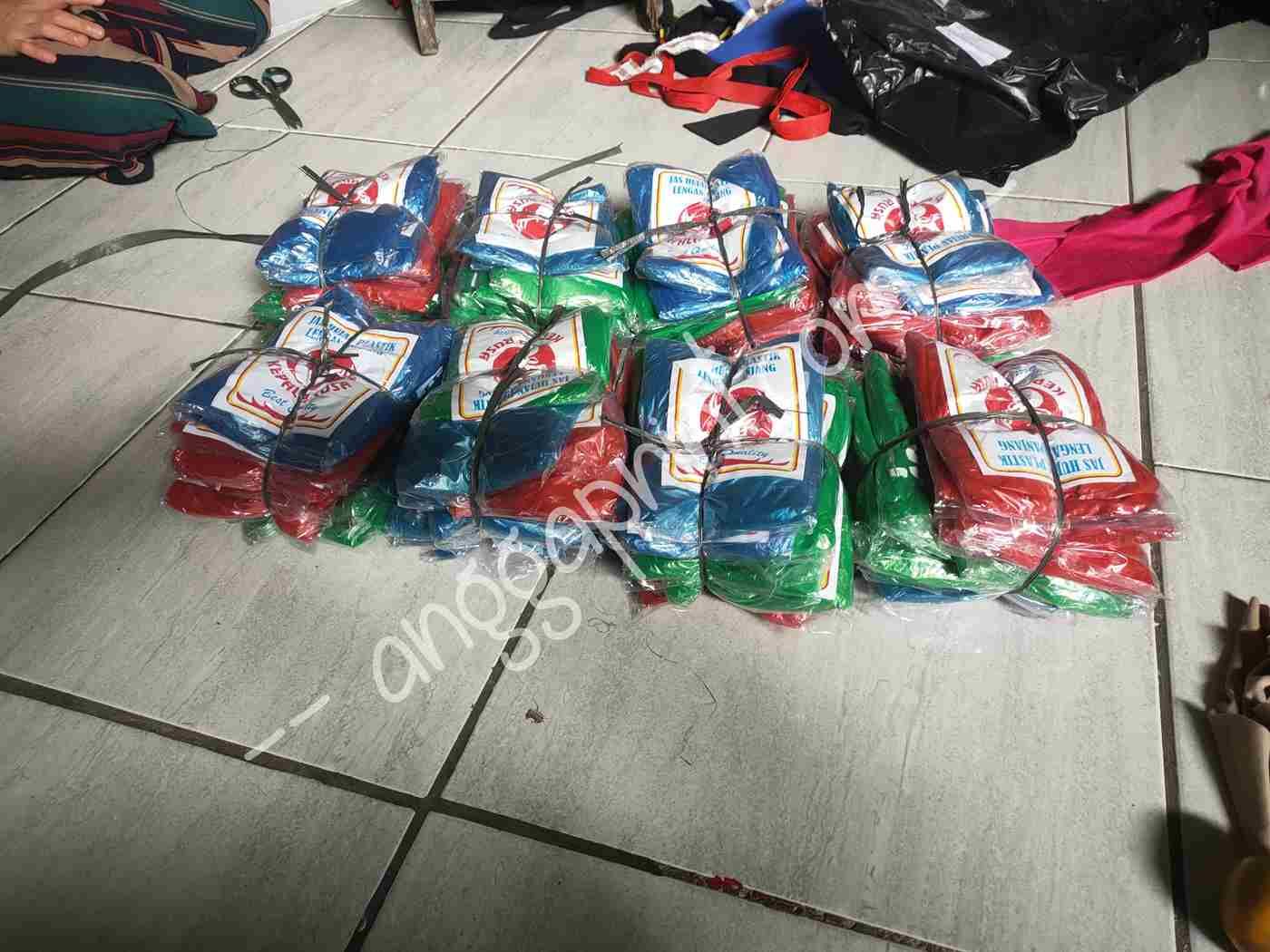
The cleanest approach: HRD sends a per-size breakdown based on headcount data. We produce to that mix, with a small surplus for new hires or replacements. For factories with several divisions, we can split the order into per-division packages so on-floor distribution doesn't get mixed up.
Logo, Reflective, and Work Identity
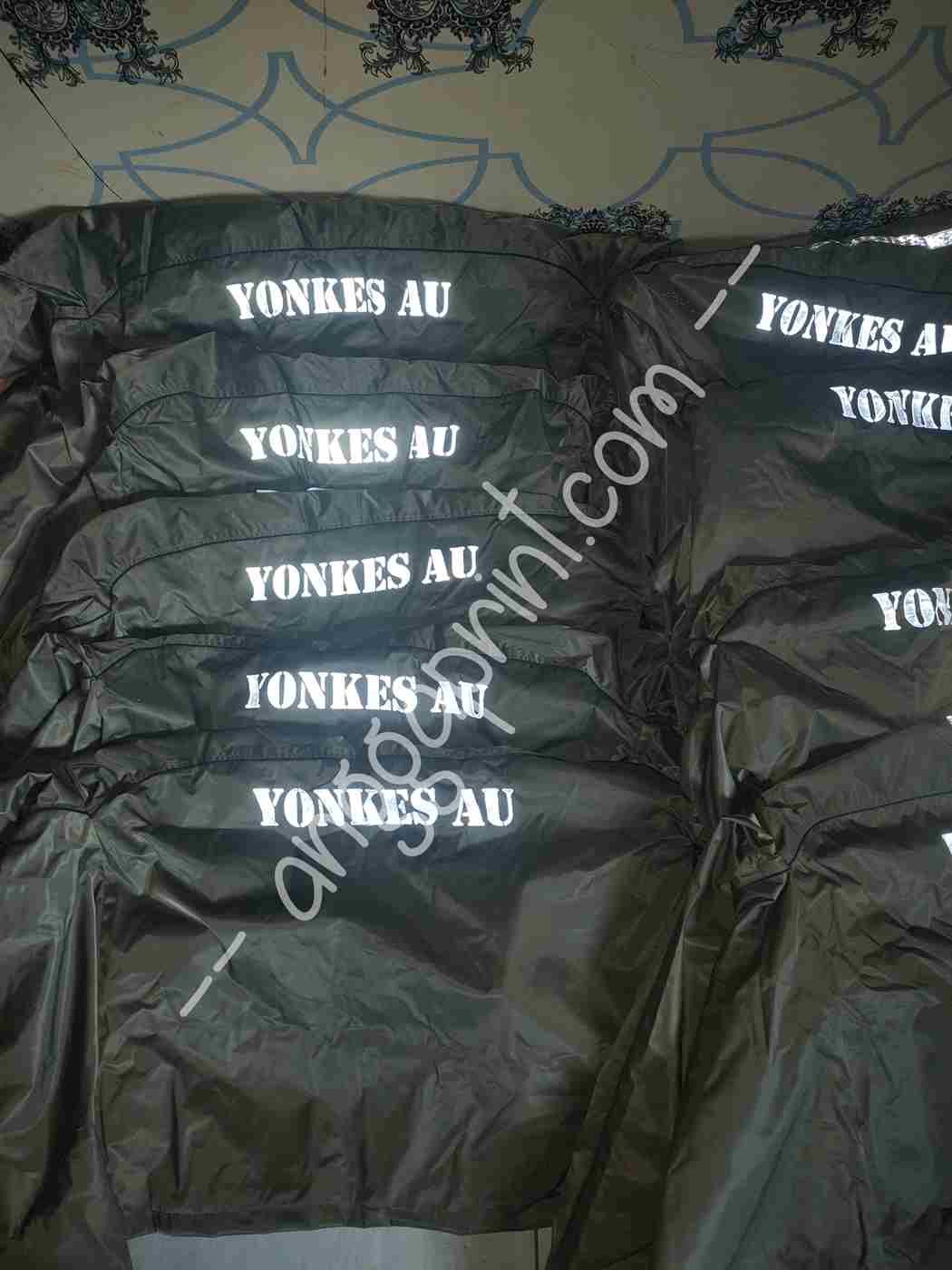
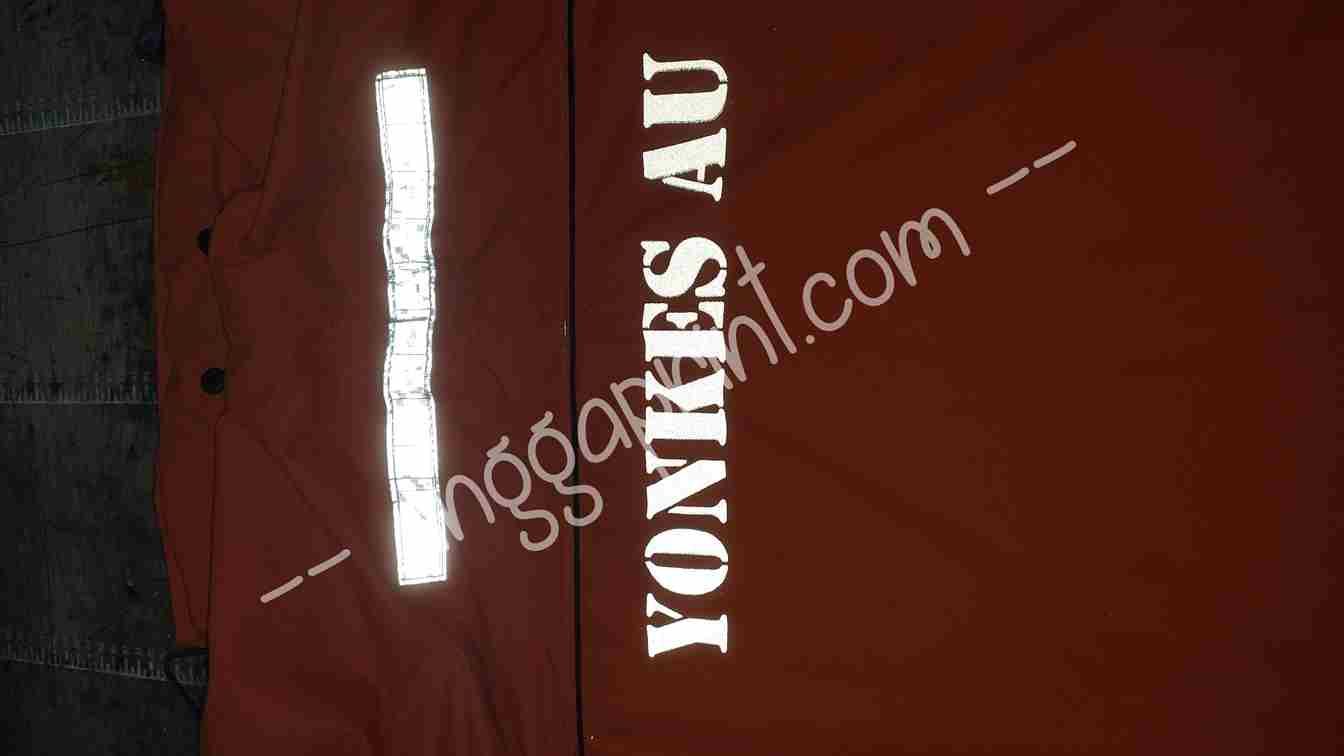
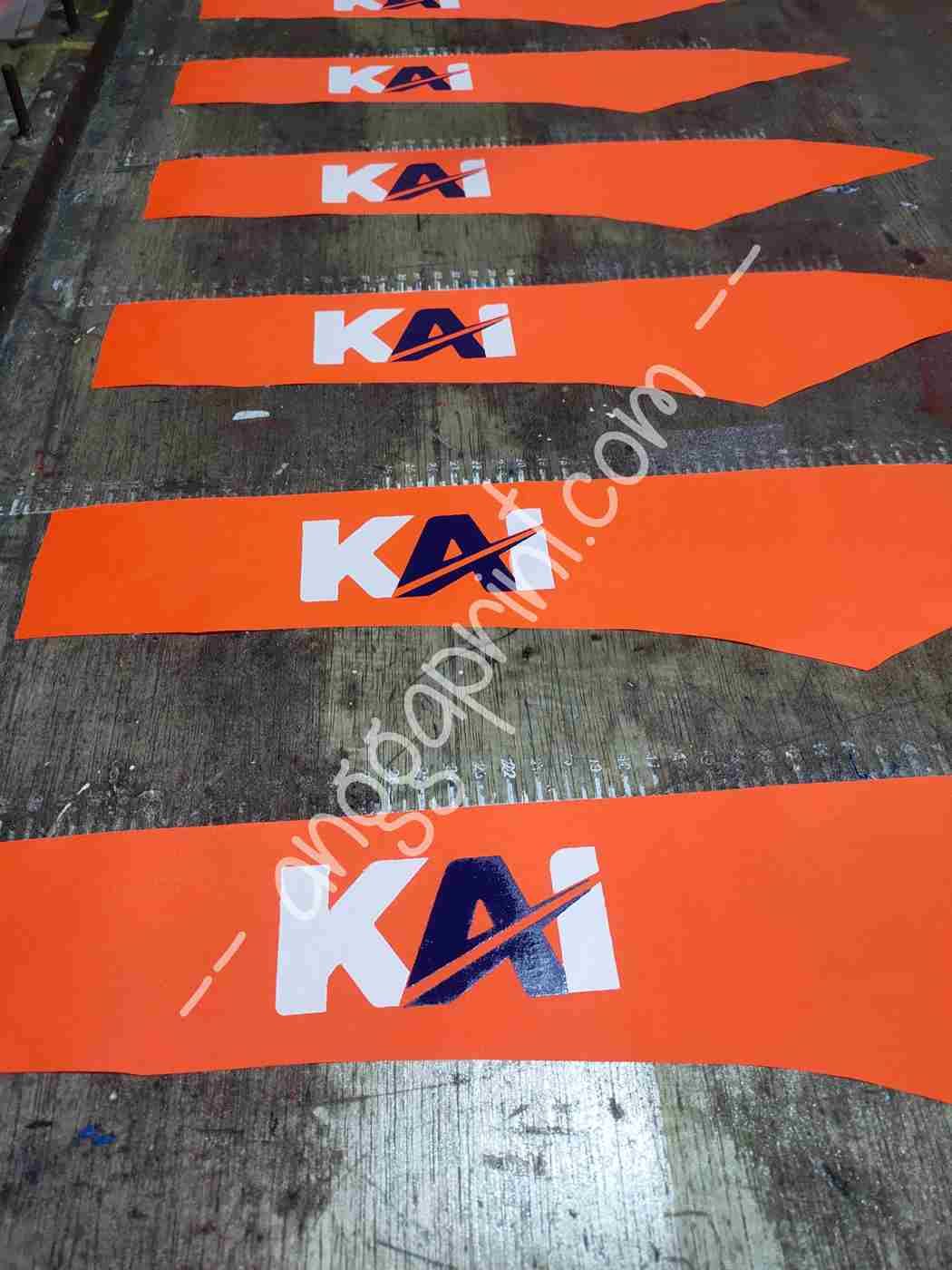
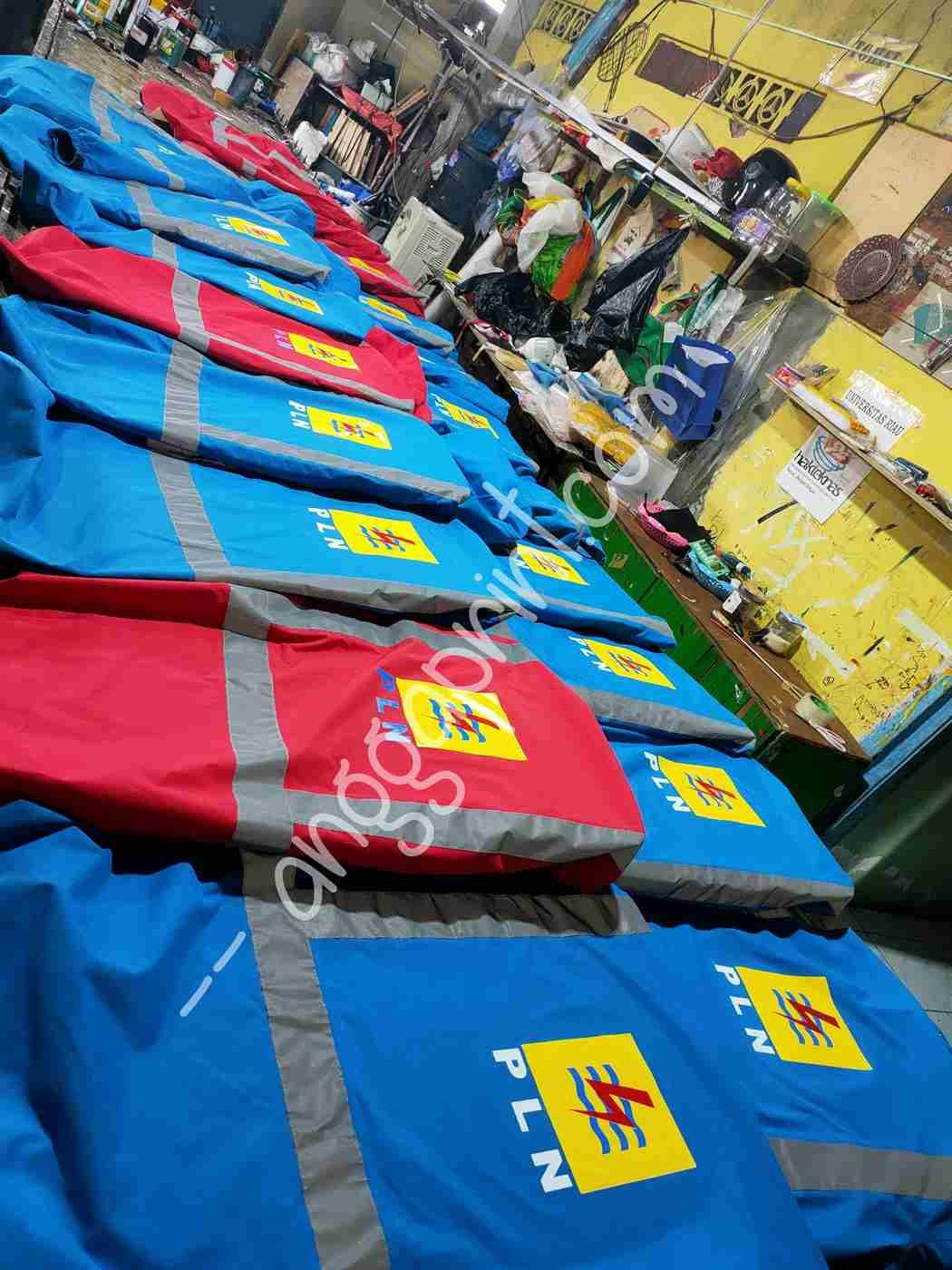
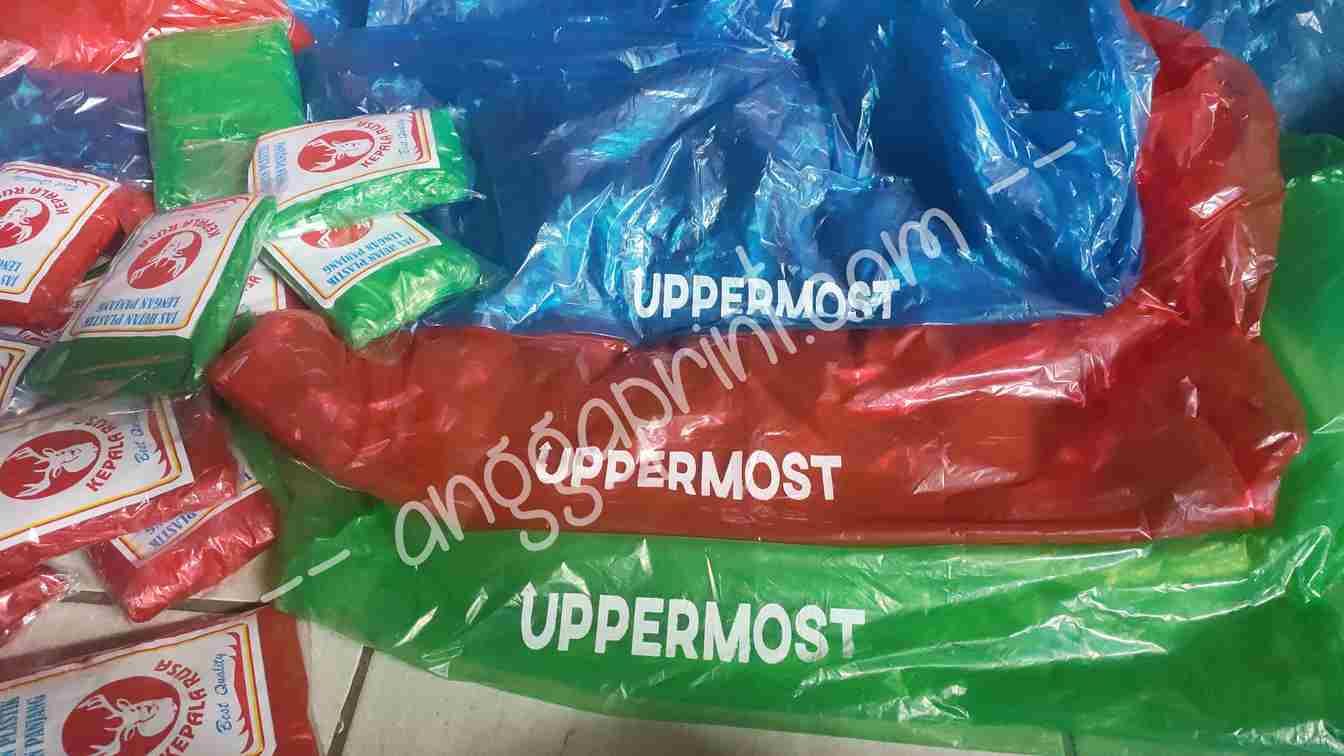
We print the company logo on the chest and back. If needed, we add a division name or shift code so they're easy to tell apart on the floor and stay tidy in PPE records. For color, we follow the company brand guide, including a body color matching the corporate code if the quantity meets the custom-color minimum.
The reflective strip is optional and depends on the area. For workers moving through vehicle zones, warehouses, or yards with forklifts, a reflective strip adds visibility and lines up with K3 rules about workers needing to be seen around heavy-equipment traffic. For purely indoor areas, the strip can be skipped to keep the per-unit cost down. We match it to your factory's real conditions rather than adding features that go unused.
We send a single-unit mock-up for HRD or GA approval before the full batch runs, so there's no misplaced logo or wrong color discovered only after hundreds of units are made.
Ordering and Timeline
We use the first consultation to understand the work area, exposure type, headcount, and distribution deadline. From there we recommend material, features, and a size table. Once the mock-up and price are approved, production runs as soon as the deposit clears. For hundreds to thousands of units, we stage the schedule and ship per division by priority. Wholesale pricing gets more efficient at volume, and we send the breakdown within a day of receiving complete specs.
Request a Quote
If your factory needs raincoats as part of the PPE kit with the company logo and consistent sizing by headcount, reach our team for a free consultation and a quote. For field needs with heavier safety standards, see construction workers, and for area security vendors see security guards.